
Strategic Resilience: Why the Circular Economy is our strongest Security Lever

The recent Event in the Austrian Parliament on Strategic Resilience, hosted by the Center for Risk and Crisis Management Austria, underscored a critical shift in global risk management: resilience is no longer just a "nice-to-have" sustainability goal; it is a collective and fundamental mandate for survival in an era of polycrisis. Modern societies are currently hyper-dependent on fragile global supply chains and fossil fuels. An abrupt halt in international oil flows or logistics can cause systemic failure in energy, food production, and water infrastructure within days.
To safeguard our future, we must move beyond the linear "take-make-dispose" model and embrace the Circular Economy not just as an environmental tool, but as a defensive security lever.
1. Eliminating Single Points of Failure through Decentralization
The ZRK discussions highlighted that centralized systems are vulnerable to large-scale disruptions. The Circular Economy addresses this by promoting decentralized and local systems. By shortening supply loops and utilizing local resources - such as water, biomass, and cycled materials - communities can eliminate "single points of failure risks" that occur when a single remote node in a global chain fails. Think of it as a network of networks, if one point or node in the network breaks, the others step in to restore the supply and demand equilibrium. This makes the overall system way more resilient to positive and negative supply shocks.
2. Safeguarding Critical Infrastructure: The Three Pillars of Circular Security
The circular model acts as a security hardening strategy for our most vital systems:

Material Flows & "Urban Mining": There is no waste in nature. It is a concept that humans have created. In a crisis, the "waste" of yesterday becomes the strategic reserve of tomorrow. By viewing existing buildings, infrastructure, and old devices as raw material sources - a concept known as Urban Mining - we secure the materials needed for repairs and maintenance even when imports cease.
Energy Systems: Circular Economy promotes a transition to diverse, independent and decentralized energy sources without ideology. This includes oil, gas, nuclear energy, small-scale biogas production from organic waste for cooking or heating , and the use of modular PV systems to maintain essential communication and lighting. Although it needs to be said that the baseline of energy supply should not be touched and messed with, as it provides the existential resource for industry and therefor high standard of living, additional energy carriers can reduce shocks in these scenarios. In short: the more energy available the cheaper the price, the higher the standards of living. There is simply not advanced nation in the world with low amounts of electricity. It is in direct proportion to one another.
Water Security: Public water systems are often dangerously dependent on the power grid. A resilient circular water system combines decentralized sources like groundwater wells (operated by mechanical hand pumps) with rainwater harvesting and graywater filtration for secondary uses. Decentralized rainwater storage systems can also provide a decentralized mechanism to spread the single points of failure risks in a population.
3. Practical Implementation: The "R-Strategies" as Defense and Resilience Mechanisms
To move from theory to practice, organizations and municipalities should implement specific R-strategies (Refuse, Rethink, Reduce, Reuse, Repair, Refurbish, Remanufacture, Repurpose, Recycle) to close loops:
The most powerful R-Strategy available: Refuse. If one refuses to conduct things that harm oneself and the community, this automatically leads to regeneration, as regeneration is subject to an implicit order and therefor self-emergent.
Technical Loops: Focus on reuse, refurbishment, repair, maintenance, and sharing to extend the life of critical equipment.
Biological Loops: Utilize composting and anaerobic digestion to transform organic "waste" into fertilizer and energy, securing local food production.
4. Knowledge and Community as Strategic Assets
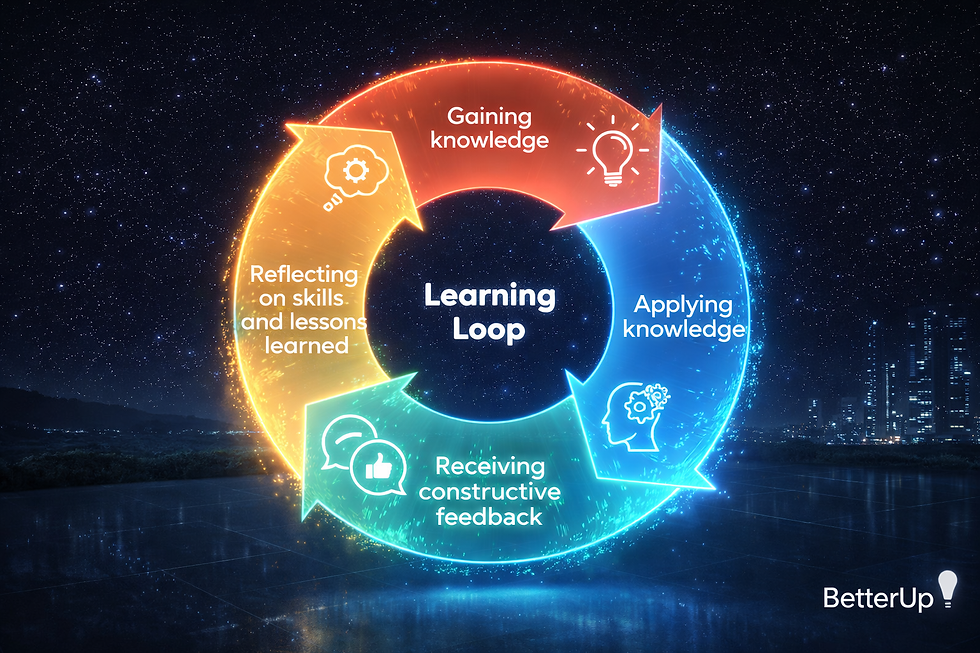
True resilience requires more than hardware; it requires a Knowledge Loop. In a crisis, practical skills like water purification, repair, and food preservation become more valuable than stored goods. Local cooperation through tool-sharing communities and neighborhood networks provides a social security layer that maintains stability and prevents conflict.
Conclusion: The Integrated Resilience Mandate
The full power of the Circular Economy is unleashed when these systems are integrated. Solar energy powers water pumps; landwirtschaft (agriculture) produces biomass; biomass provides energy and fertilizer; and used materials are continuously repaired and reused. Only if these loops are seen as an integrated system based on analysis, common sense and age old practices, they can act on their true potential.
By creating these interconnected, local loops, we transform our vulnerable linear dependencies into a robust, adaptable, and secure supply system. The Circular Economy is not just about saving the planet - it is about ensuring our society remains functional, no matter what the next crisis brings.
Let´s talk: www.calendly.com/raphaelschranz

About Raphael Schranz
Multiple times certified Circular Economy Specialist | Blockchain Investor | Head of Competence Center Circular Economy ZRK | Lead Auditor Austrian Standards | Advisor Circular Economy Forum Austria
Contact Details
Raphael Schranz
Telefon: +43 676 9222527
